
Lake County Traffic Warrants Explained
Lake County traffic warrants come from a courtroom, never from a license bureau or a payment counter. The order belongs to the traffic case itself. Minnesota starts the clock with a citation. It sets a date to pay or appear. Miss both, or skip required proof, and the court can act. Its responses differ case to case. One court sends a notice or sets an arraignment; another issues a bench warrant or refers the matter for a complaint; some do nothing more. A warrant is a real possibility, though it never follows automatically.
Checking for a Traffic Warrant
Start with the citation number. It is the fastest route. Minnesota's court payment tool finds a case by citation or case number, but the number must be complete, normally without dashes or spaces. The statewide case search shows the same case when the record is public. No number in hand? The Court Payment Center can recover it. Court Administration at the Two Harbors courthouse can then speak to the Lake County case file itself. Note: The payment tool is an informational service, so treat its display as one view of the case rather than a certification of status.
Lake County Traffic Warrant Citation Search
Precision drives the state's citation lookup. A partial number returns nothing. A number typed with punctuation fails just the same. Keep the citation in front of you. The citation search instructions spell out the field and the format for a Lake County warrant check, and the tool itself reports the case number, party, filing date and location, case type and status, charges, and any amount due.
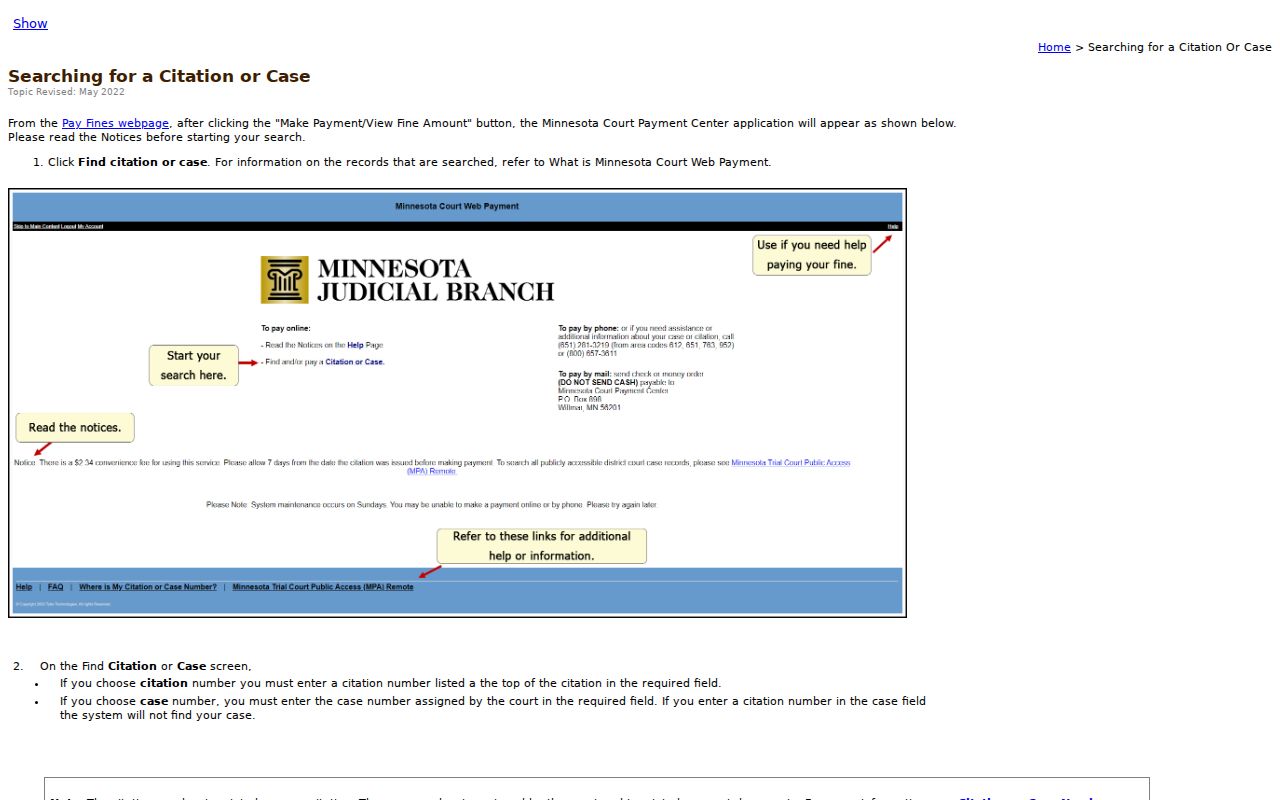
One search covers one number in Lake County. The screen cannot reveal an unrelated warrant sitting on the same person, because the lookup reads only what you typed.
Inside a Traffic Warrant Record
A traffic case file is compact. Each field in a Lake County record answers a different question about where the matter stands.
| Citation or case number | The identifier, in forms such as 56-VB-26-4471 |
|---|---|
| Party named | The person cited, which is not an identity confirmation |
| Filing date and location | When and where the case was filed |
| Case type and status | How the court classifies the matter and where it stands |
| Charges | The cited offense or offenses |
| Amount due | What the court shows as owed on the case |
| Payment status | Whether the court has recorded a payment |
An amount due is a balance, not a statement about whether a warrant exists.
Lake County Traffic Warrant Payment Rights
Paying a payable citation gives up real rights. You lose the right to confront witnesses. You also lose the right to remain silent. That trade deserves a pause before any payment screen. The court pay-a-fine page adds that payment or appearance is generally due within a set period from filing, and that processing a citation in Lake County takes time.
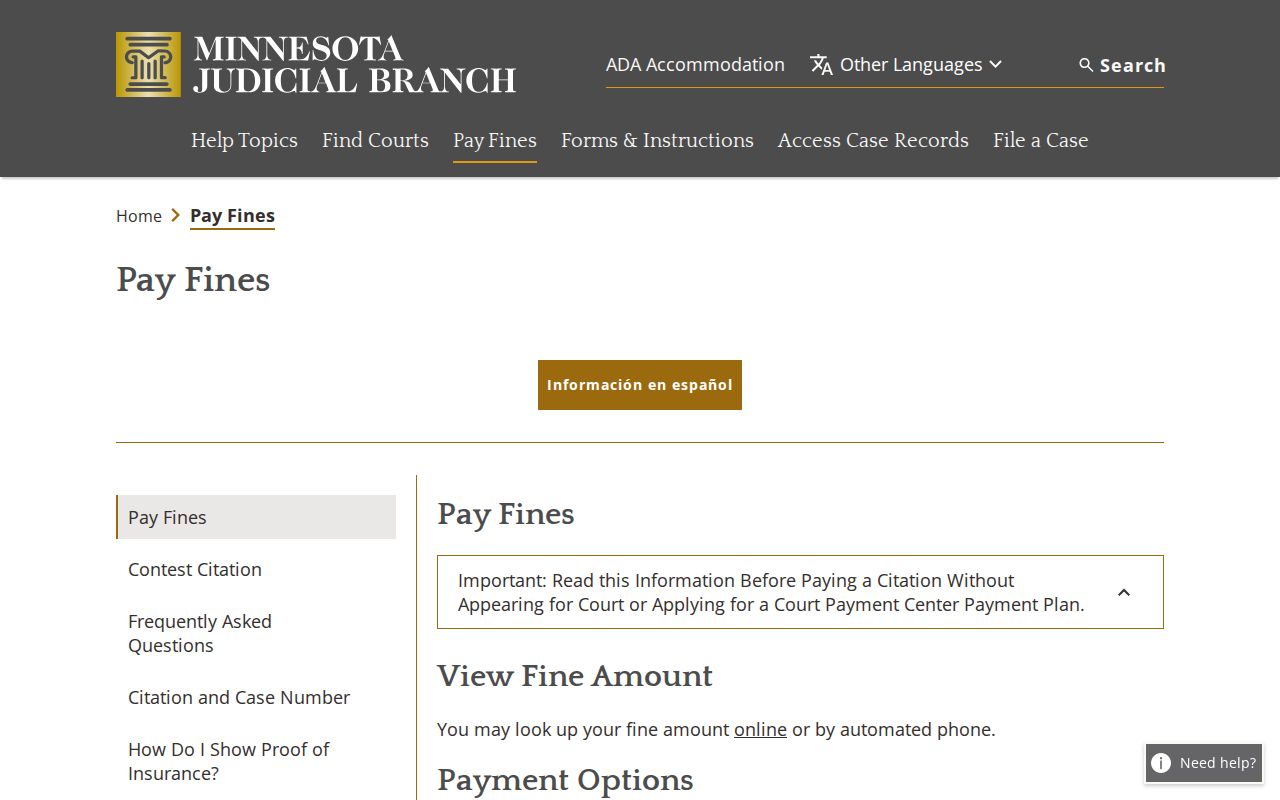
Someone in Lake County who wants to contest a citation should not pay first and ask questions later.
How to Pay or Lift a Traffic Warrant
Lifting a warrant means a court ends it. Payment the court accepts can do it. So can an appearance, or proof of what the case required, like valid licensing or insurance documents. A Lake County judge may also want a hearing or a motion before the warrant goes away.
A payment screen is not a recall order. Even after you pay, confirm with the court that no warrant or failure-to-appear event remains on the case.
Payment plans cover eligible citations. You apply and agree to a set monthly amount. Answers usually take a few business days, and a plan is an arrangement, not an automatic Lake County warrant clearance.
Lake County Traffic Warrant Balances
The payment tool calls itself unofficial. Its job is helping you pay a citation. Clearing a balance and clearing a warrant are separate events with separate records in Lake County. A case can show a zero balance yet still carry an open failure-to-appear entry only a judge can fix. The reverse happens too. A payment posted late can leave a warrant in place for days.
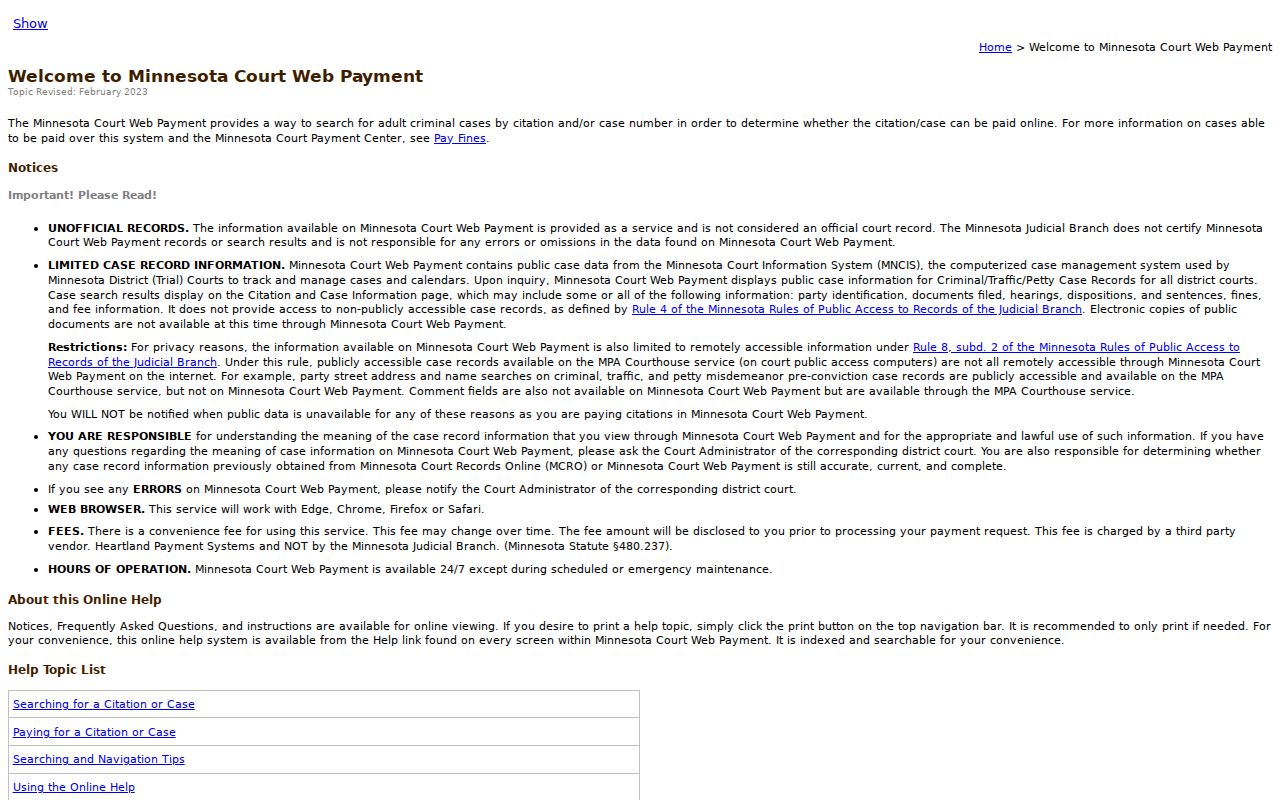
After any payment, ask the court what the Lake County case file shows, and keep your confirmation number.
Traffic Warrants, FTA, and License Holds
Three consequences travel together in people's minds and live in different places on paper.
| Consequence | Where it comes from | How it is addressed |
|---|---|---|
| Citation obligation | The ticket itself, with a date to pay or appear | Payment, appearance, or a court-approved resolution |
| Failure to appear | The court's record after a missed date | A court action, which may be a hearing or a motion |
| Warrant | A judge's order on the case | Recall, quash, bail, or an appearance the court sets |
| Notice to another agency | Court administration, under Minnesota Statutes section 169.92 | Handled through the court and the agency that receives the notice |
A license hold can outlast the case. That is why the Lake County court record is the place to start, not the place to stop.
Lake County Traffic Warrant With No Number
Lost paperwork is the norm, not the exception. The Court Payment Center exists for this. Its contact form asks for a name, a citation or case number, the offense date, a subject, and a message. It warns against sending confidential information. The payment center contact page lists the phone line for urgent questions and notes that form responses typically take two to three business days, even for a Lake County traffic warrant.
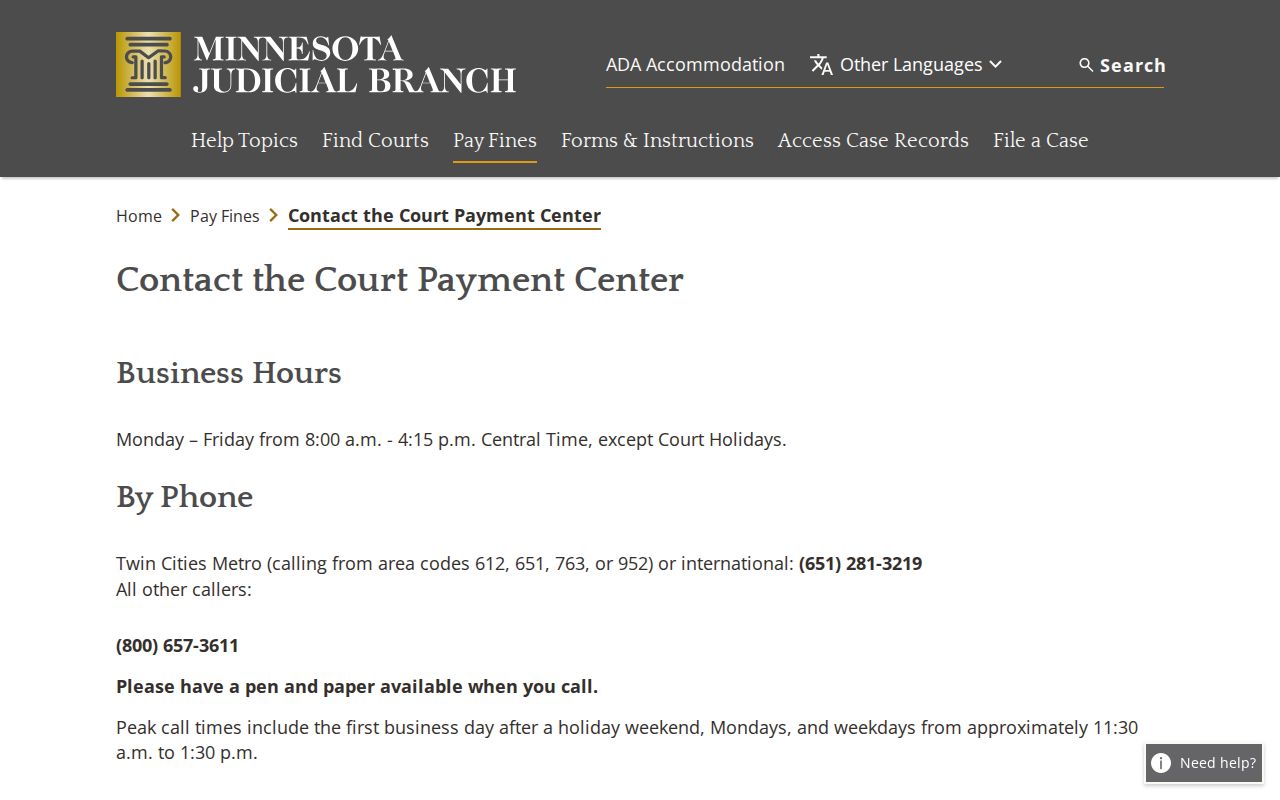
Use the official number or form. Never trust a caller offering to clear a Lake County warrant for a fee.
Lake County Traffic Warrant FTA Levels
Minnesota splits failure-to-appear cases by the severity of the underlying charge. That distinction matters in Lake County traffic court. Skip a petty misdemeanor hearing and Minnesota Statutes section 609.491 governs, through a beyond-control process with a short window and a guilty plea framework. A missed felony date is a different animal. It falls under Minnesota Statutes section 609.49, which has a voluntary surrender provision with conditions attached. Neither law promises release. Both rewards a lawyer's reading over a guess, and the statute that applies depends on the original charge, not on how the missed court date felt.