
Lake County Arrest Warrants Explained
Most Minnesota criminal cases start with a complaint. That document lists the charge, and a judge reviews it to decide whether probable cause exists. When the judge finds it, the court may issue an arrest warrant, an order telling a peace officer to arrest the person and bring them before a judge. Lake County publishes no separate arrest warrant lookup page. The case file and the Register of Actions hold what the public can see, whenever those records are open under the state's access rules. Not every case gets a warrant. One case can carry several. And no single list collects every outstanding warrant in Lake County.
Rule 4 and Lake County Arrest Warrants
Minnesota Rule of Criminal Procedure 4 does more than govern issuance. It sets the timeline. The rule covers arrests made without a warrant, how quickly a judge must review custody, and how bail or release conditions are set after an appearance. A warrant is one option, not the only one. A court can direct a summons instead, which asks the person to appear without authorizing immediate custody. The text of Rule 4 is public. It spells out each step a Lake County case follows.
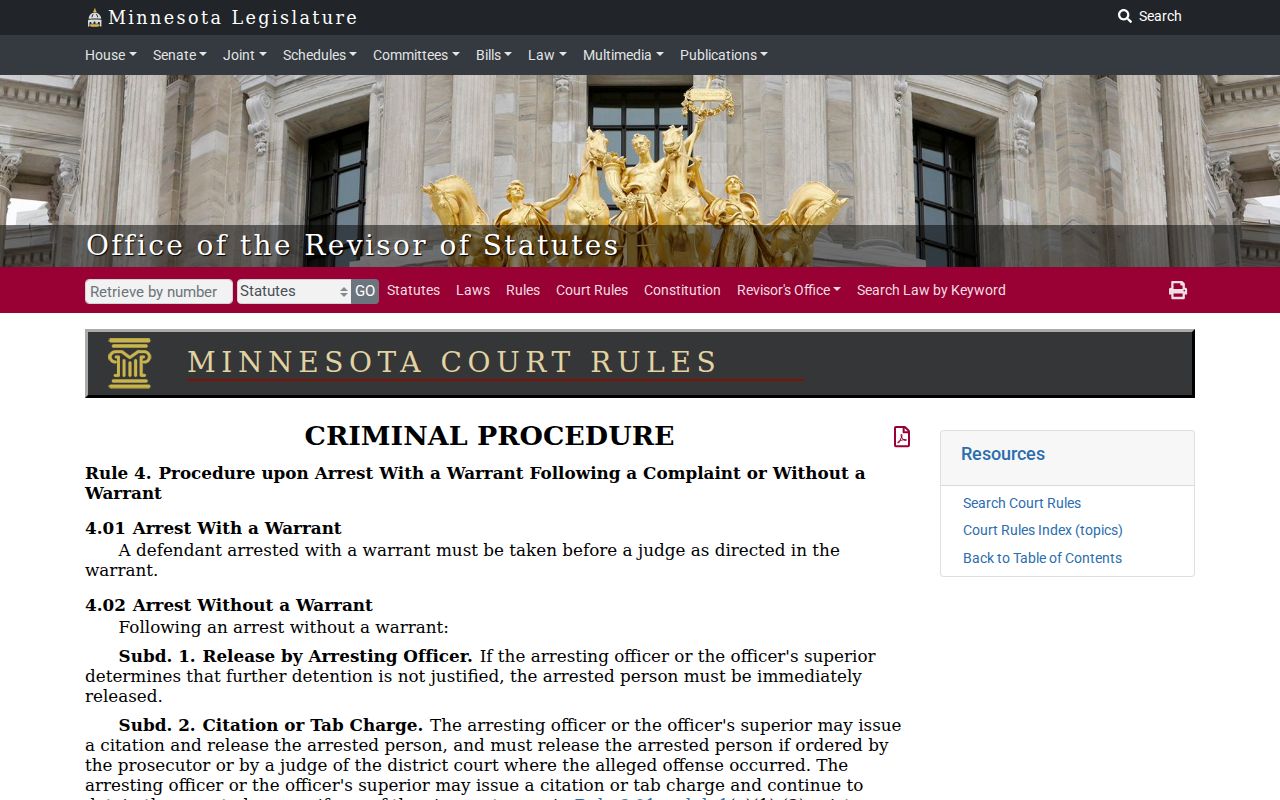
The rule sets the sequence a Lake County case follows, from complaint to first appearance.
Inside a Lake County Arrest Warrant
The warrant itself is brief. Most of the detail sits in the file around it, and what a reader can see in Lake County depends on the case and which parts are public.
| Case number | Identifies the file, in forms such as 56-CR-26-104 |
|---|---|
| Person named | The defendant, which is not by itself an identity match |
| Charges | The offenses alleged in the complaint |
| Probable cause basis | The sworn grounds supporting the order, where public |
| Issuing judge | The judicial officer who signed it |
| Issue date | When the court authorized the arrest |
| Executing agency | Who served it and when, if that is recorded |
| Bail or release terms | Set after an appearance, confirmed with the court |
Serving Arrest Warrants in Lake County
The Lake County sheriff's office serves these orders. Deputies also handle civil process, the jail, and county dispatch. From Two Harbors, a Silver Bay station, and a post near Fall Lake, they cover roughly 2,062 square miles. City officers make arrests too. Two Harbors Police work from the lower level of the county law enforcement center. Silver Bay Police serve process as well. Minnesota law defines a peace officer to include sheriffs, deputies, and municipal police, and Minnesota Statutes section 626.05 sets that out. A Lake County warrant can reach any of them. It can be executed wherever the person turns up, not only in the county that issued it.
Lake County Arrest Warrant Case Files
Minnesota Court Records Online is the public route into a Lake County district court case. It shows case categories, parties, filing dates, hearing entries, and status. It links to documents for eligible cases. It is not a warrant index. No part of it sorts cases by active warrant. The document search side of the same system covers eligible filings, and the Judicial Branch warns that some records, including search warrants, are available only at a courthouse terminal.
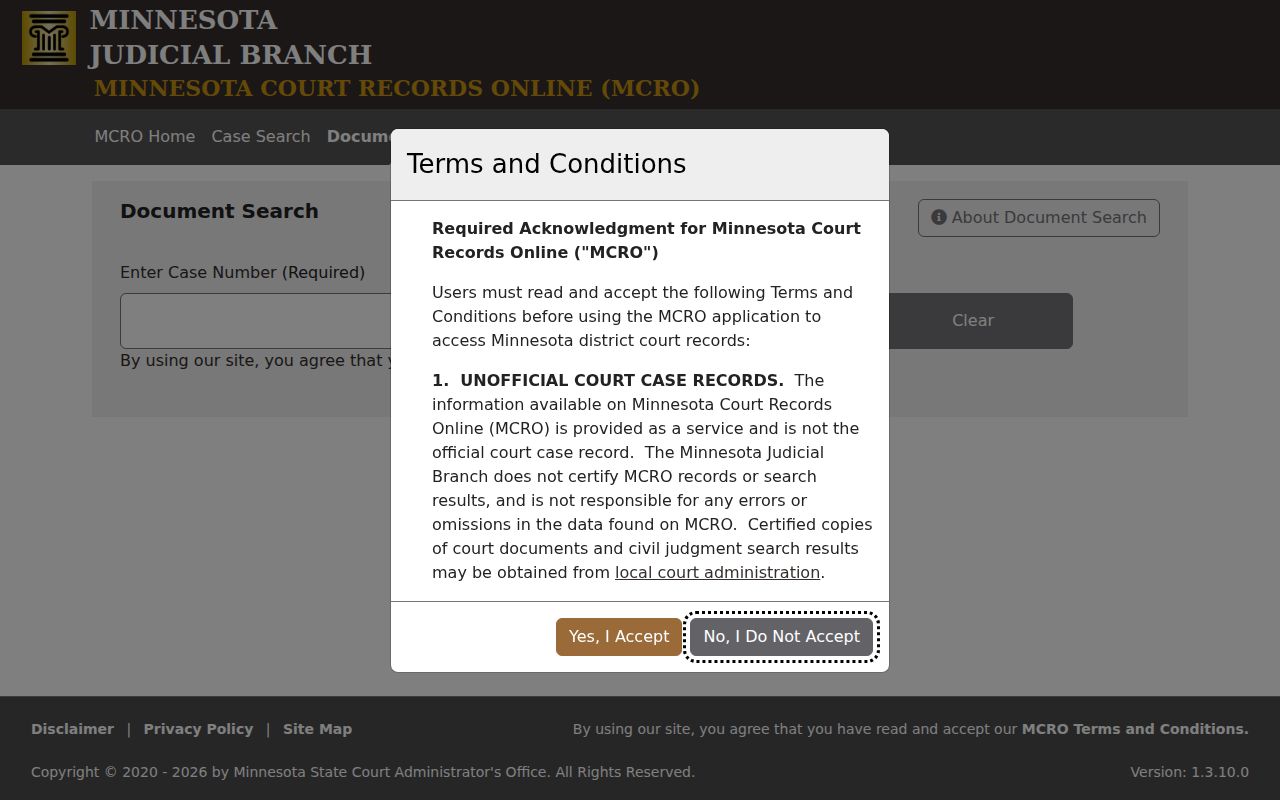
Start online. For anything the remote system holds back, use the public computer at the Two Harbors courthouse in Lake County.
Comparing Arrest, Summons, and Bench Warrants
Arrest warrants, summons, and bench warrants do different jobs. The tool a Lake County court picks shapes what happens next, so the difference matters when you choose a response.
| Tool | What it does | When it is used |
|---|---|---|
| Arrest warrant | Authorizes custody and a prompt appearance | A complaint and probable cause support it |
| Summons | Directs an appearance without authorizing custody | The court expects voluntary response |
| Bench warrant | Authorizes custody after a missed obligation | A hearing or condition was not met |
Note: A Lake County court can issue a summons even in a serious case, so the choice of tool is not a ranking of the charge.
Lake County Arrest Warrants and Guilt
In Lake County, data rules split the same way. Under Minnesota Statutes section 13.82, much arrest-response information is public, while active investigative material stays protected. A redacted file is a classified file. It is not an empty one.
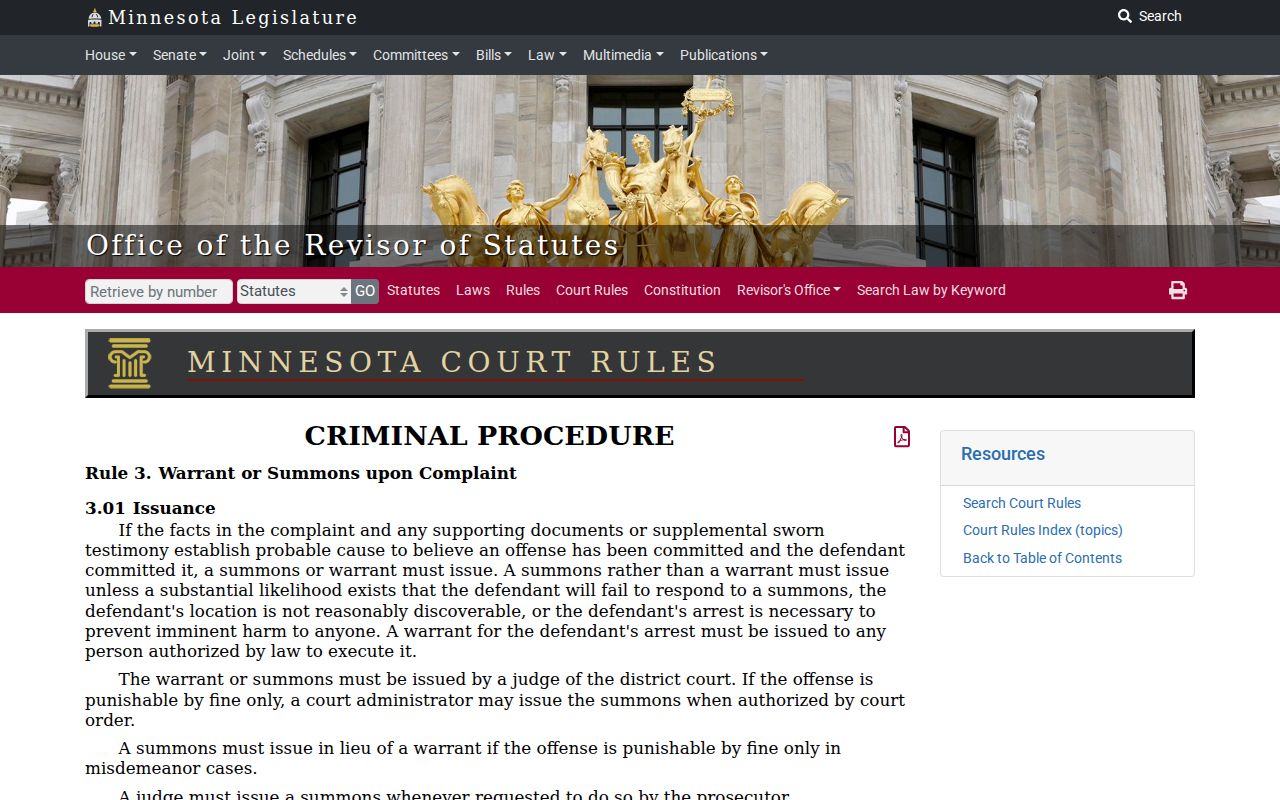
Treat each public entry as procedural. Confirm the real outcome with the Lake County court before you draw any conclusion.
If There's an Arrest Warrant for You
Slow down and think. An arrest warrant can be served at a traffic stop, at your door, or at a courthouse counter in Lake County. Walking in can end in custody. The Judicial Branch says so plainly. A lawyer can learn what the case needs and whether a date, a surrender, or a motion can be set first.
Do not wait for a traffic stop. An active arrest warrant can put you in custody at any time, so get legal advice before deciding how to respond.
Your options include a court-scheduled appearance, posting bail, meeting release conditions, or a motion to recall or quash the warrant. A felony failure to appear has its own statutory rules. In Lake County, let counsel handle that.
Lake County Arrest Warrants and Federal Cases
Lake County sits inside the federal District of Minnesota. A federal arrest warrant never runs through the state courts or the sheriff's list. The U.S. Attorney's criminal procedure page explains how a federal complaint and warrant arise. Case details come from the federal clerk and PACER. Service belongs to the U.S. Marshals Service. Federal filings can be sealed before an arrest, so a missing result in a Lake County search says nothing either way.
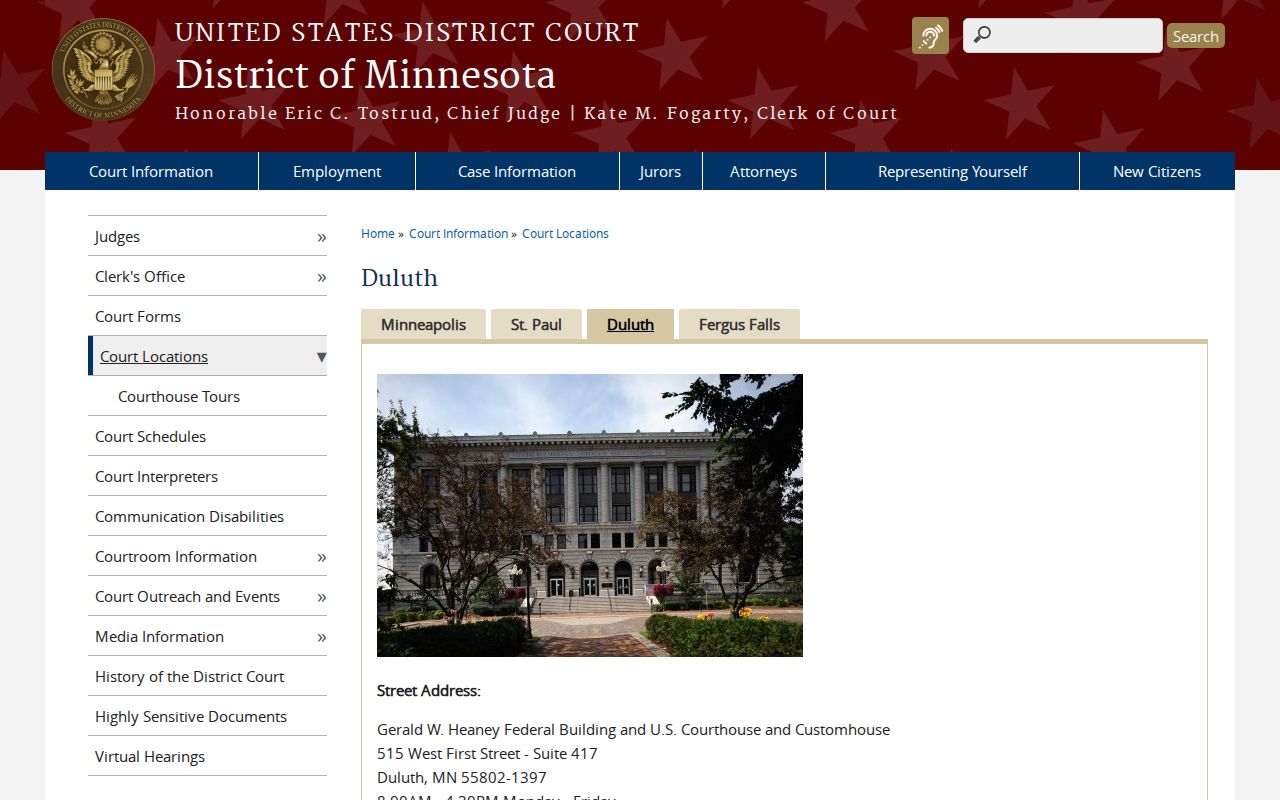
The Duluth division handles federal matters here. Its in-person hours, useful for Lake County residents, come from the federal court itself.
Lake County Arrest Warrant Service Steps
One warrant in Lake County can leave several marks on a case file. The order of events matters. Reading the entries out of sequence is the easiest way to misread a criminal record, so track each step as it lands.
- Complaint
- The charging document that starts the case and supports probable cause.
- Issue
- The court's act of authorizing the warrant. Nothing has happened to the person yet.
- Execute or serve
- An officer carries out the order and takes the person into custody.
- Return
- The officer reports back to the court about what happened.
- Recall or quash
- A court ends the warrant's authority to be executed.